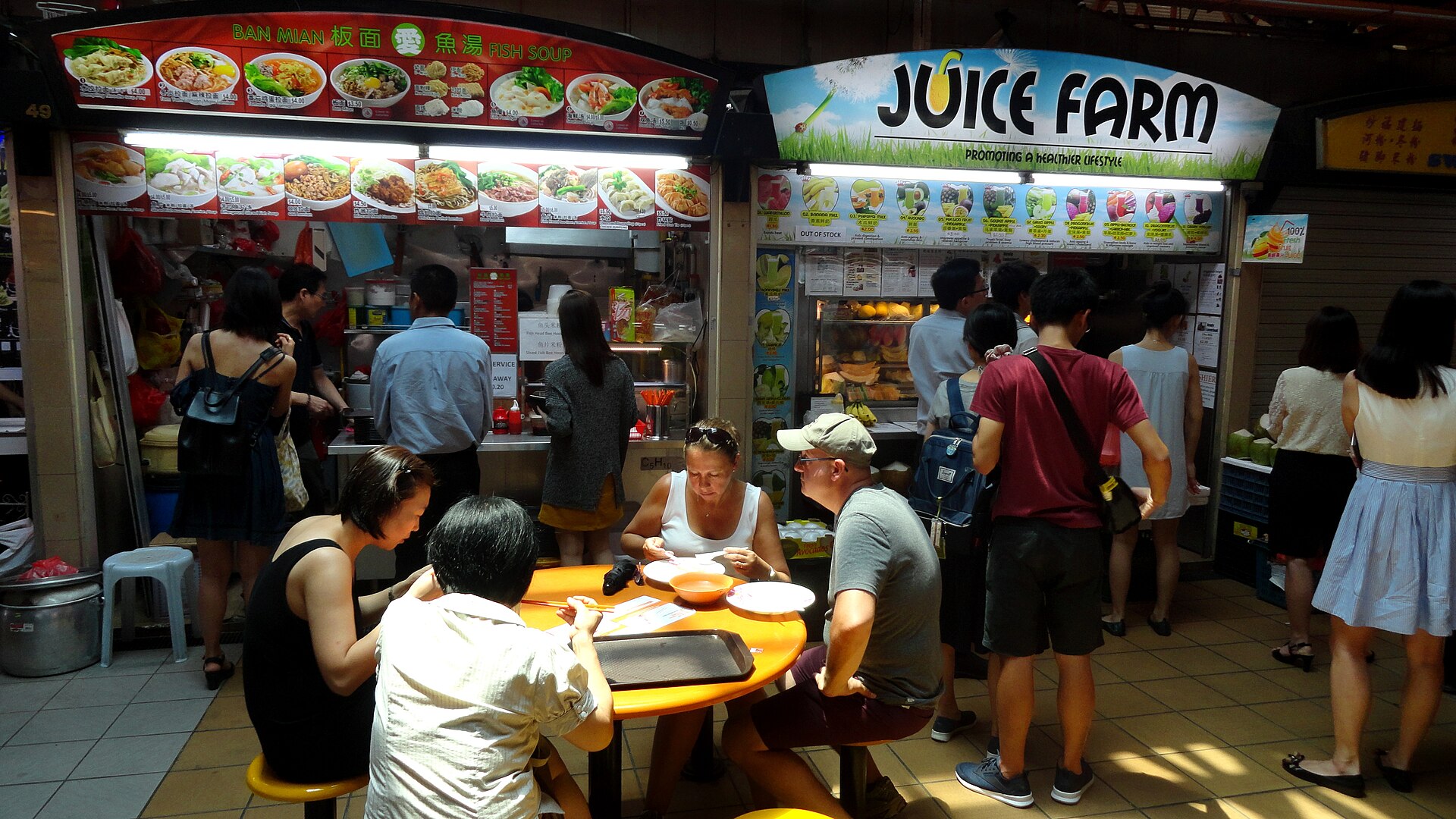
A Singapore hawker centre is not a food court with trays and a cashier at the end. You order at the stall, pay there, then sit at a shared table. The first five minutes feel noisy. After that, it is the cheapest and most local meal you will eat on this island.
Chope, then order — not the other way around
If the hall is busy, put a packet of tissues or a name card on an empty table before you queue. That is chope — a reserved seat. Nobody will take it. Do not chope six seats for two people. Once you have a table, walk a full loop. Look at who is sitting, not at which stall has the longest line of tourists with cameras.
- Chope a table if lunch is packed; skip this at 10 a.m. or after 2:30 p.m.
- Order at the counter. Say whether you are eating in. Pay when they ask — some stalls take cards, many still want cash.
- Collect when your number is called, or wait if they send the plate to the table.
- Return trays to the station. It is expected, not optional politeness.
First plates I actually order with guests
Chicken rice is the safe start: poached or roasted, with chilli, ginger, and dark soy on the side. Mix them yourself. Char kway teow should smell of wok heat, not sit in a pile of sweet sauce. If you eat pork, bak chor mee at a neighbourhood stall beats the famous Chinatown queues. Vegetarian guests: ask for “no lard, no shrimp paste” and accept that some dishes cannot be adapted.
I do not send people to the single stall with a two-hour line beside a landmark. Neighbourhood centres — Tiong Bahru Market upstairs, Old Airport Road, Maxwell if you are already in Chinatown — taste better and seat faster.
Heat, chilli, and timing
Hawker halls are fans-and-open-air, not mall air-con. Drink sugarcane or barley if you are not used to the humidity. Peak lunch is 12:00–1:30 p.m. I take walking groups at 11:15 or 2:00 so we can sit. NEA inspection grades hang at many stalls; a “B” is still fine — it is not a hygiene scare.
Three halls I use on food walks
- Maxwell Food Centre — closest to Chinatown temples; chicken rice queues are real, other stalls are quieter.
- Old Airport Road — larger floor, more Malay and Indian-Muslim options, a taxi or bus from downtown.
- Tiong Bahru Market — wet market downstairs, hawker upstairs; my default Saturday morning stop after kopi.
On a booked food walk I order, explain the chilli, and flag what to skip. If you are going alone, pick one stall, one dish, sit down, then decide whether you want a second plate. That is how Singaporeans eat here — not a tasting flight of eight.